
The complete guide
Choosing a Wooden Brain Teaser Puzzle Set
A different kind of table break
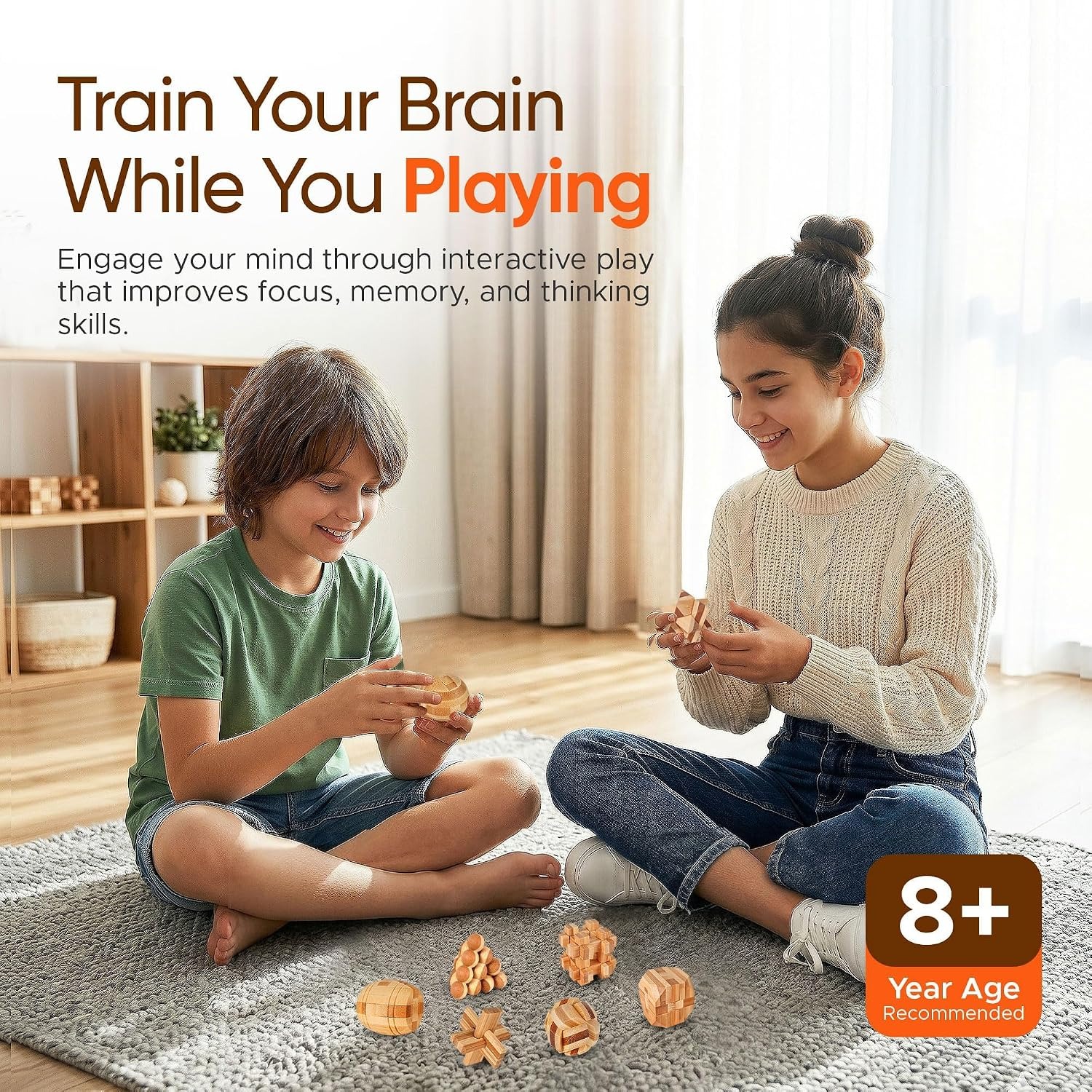
Sometimes you want an activity that gives your hands something to do without opening another screen. A wooden brain teaser puzzle set offers a physical problem to examine. You can turn it around, study the joins and test an idea with a small movement.
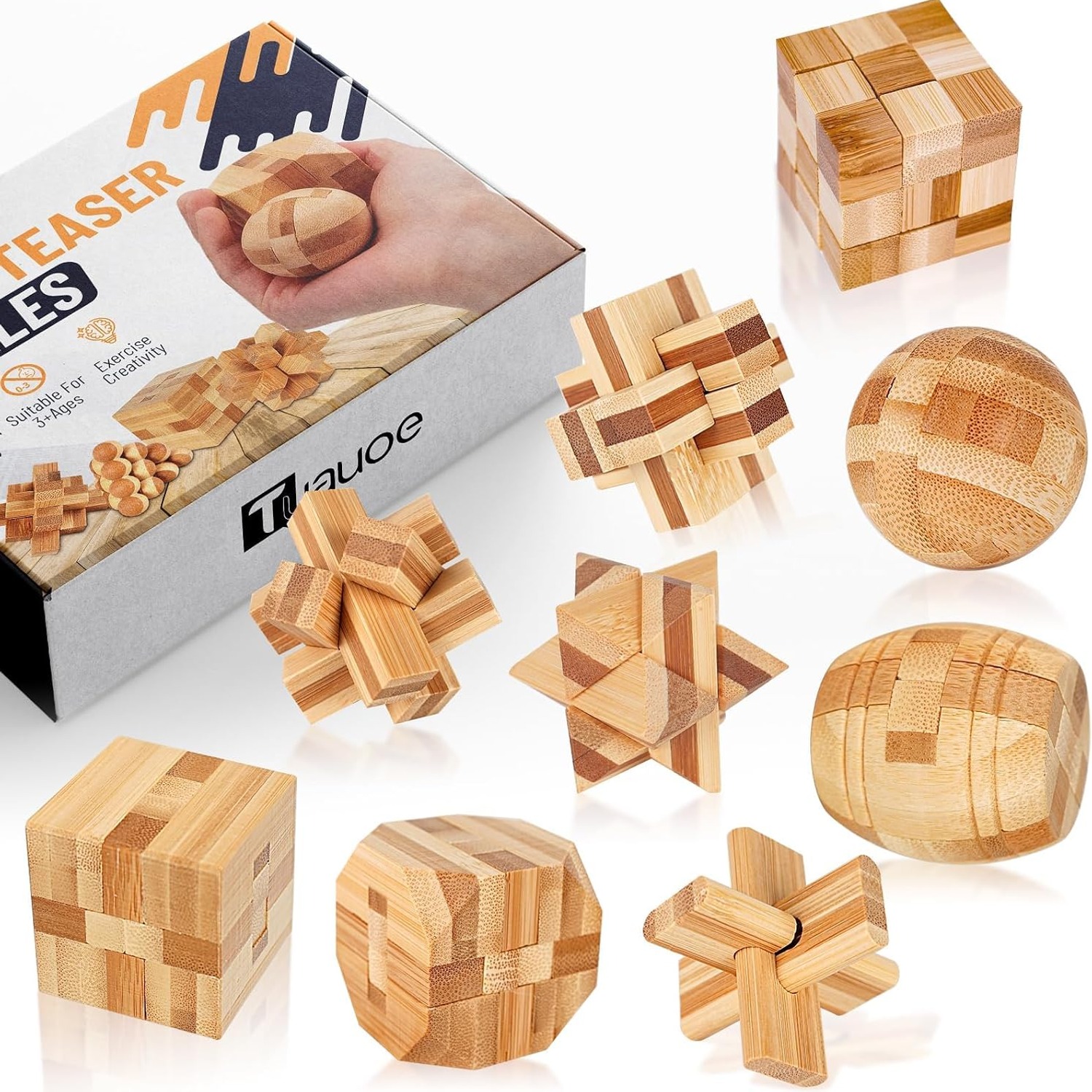
This set is listed as nine pieces, with manual operation and indoor tabletop use. Its central activities are assembly and disentanglement. Rather than matching a flat picture, you are looking at how a structure fits together in three dimensions.
That makes the choice quite personal. Some people enjoy repeating a tricky movement until it makes sense. Others prefer a clear picture and a fixed path. Before buying, think about whether the process of figuring things out is part of the appeal.
How interlocking puzzles work
Interlocking wooden puzzles ask you to pay attention to the relationship between parts. A movement that seems blocked from one angle may look different when you turn the structure. The task is to find a sequence that lets the parts separate or come together.
Start by looking before moving. Notice which joins are visible and which parts seem to hold others in place. Then test one gentle movement. If nothing changes, stop and consider a different approach instead of pushing harder.
Disentanglement puzzles can also leave you with a second challenge once they come apart. Putting a structure back together asks you to remember its arrangement or work out the pattern again. Keeping the parts in order as you remove them may help you follow your own steps.
The maker's description does not describe every mechanism in this set. It also does not confirm whether a solution sheet is supplied, so do not buy on the assumption that step-by-step answers are included.
Understanding the nine-piece description
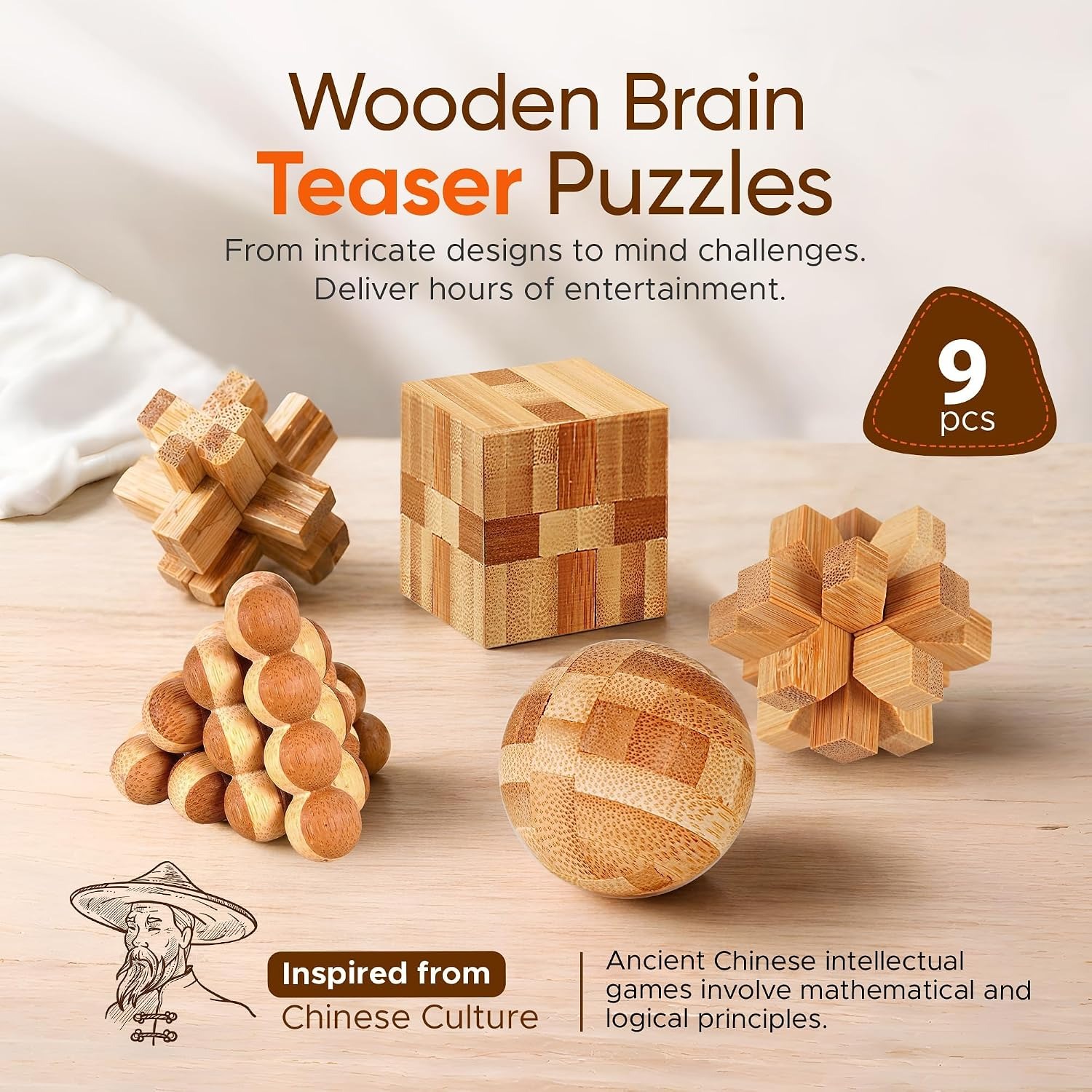
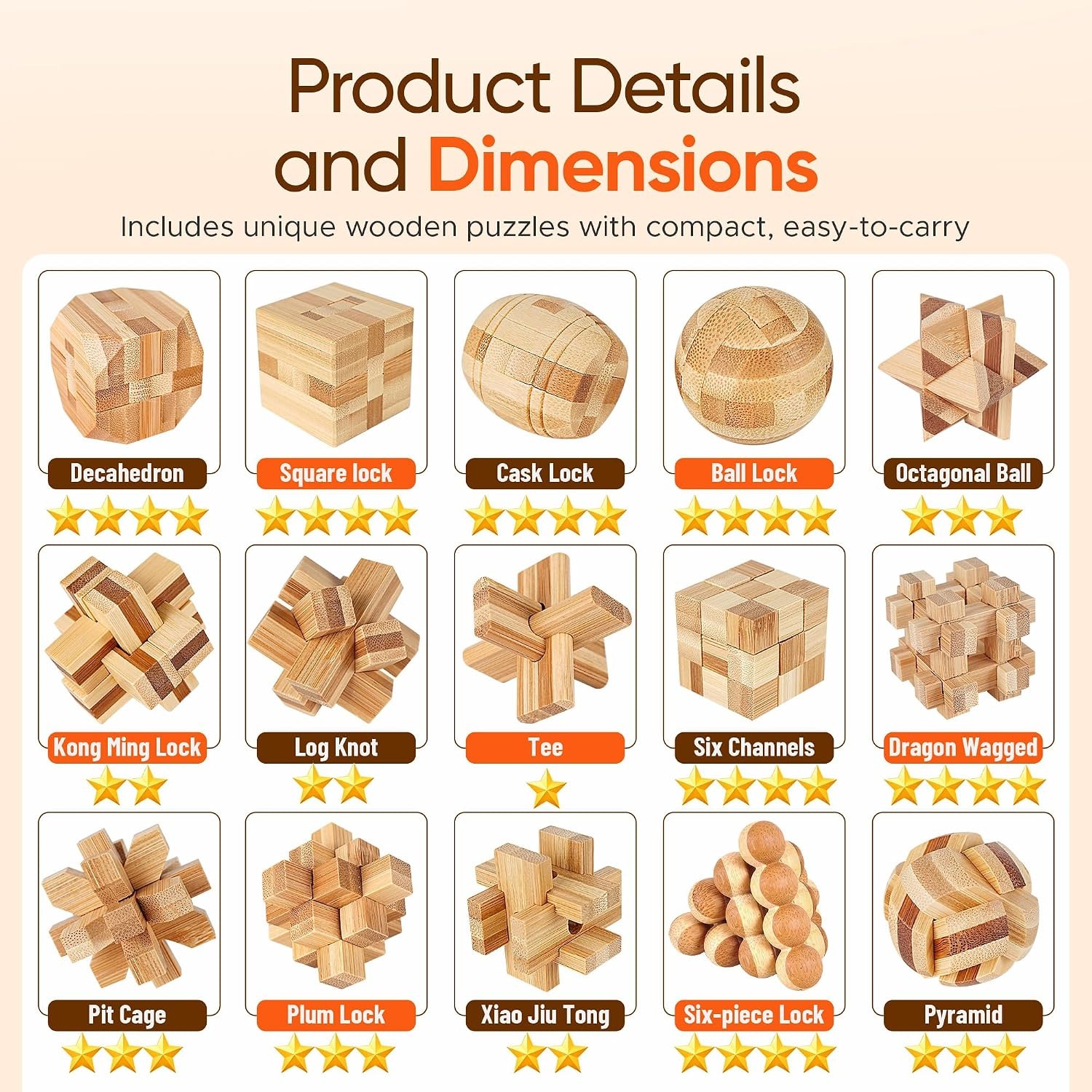
Product counts can be less clear than they first appear. Here, the number of pieces is nine, the unit count is nine and the size entry also says nine pieces. Those details identify the listed set, but they do not provide a full contents breakdown.
In particular, the maker does not clearly separate the number of complete puzzles from the number of individual wooden components. If you need a precise count of separate challenges, ask for that detail before placing an order.
The puzzle type is recorded as puzzle box, and the item shape is listed as cube. The reference description also mentions varied shapes. Treat these as broad listing details rather than a promise that every item has the same shape or function.
A nine-piece puzzle set should be chosen on confirmed information, not on guesses about what a product name might mean. That is especially important when comparing sets with different counting methods.
Who this set may suit
The stated age range includes adults, teens and children. The skill level is listed as all, and the player count is one. These details suggest a broad intended audience, but they do not tell you how easy each challenge will feel.
For someone who already enjoys adult brain teaser puzzles, the appeal may be the physical structure. A person who likes turning an object over and testing small changes may enjoy this format more than someone who wants written clues.
Teen puzzle gifts call for the same thought. Consider the person's interests rather than choosing only by age. Someone who likes building and taking things apart may be more interested than someone who prefers fast group games.
For a child, more information is needed. No exact minimum age is stated in the maker's description. Check suitability and any supplied warnings before giving the set to a younger user. The broad word “kid” is not a substitute for a precise age recommendation.
Choosing by activity, not by promises
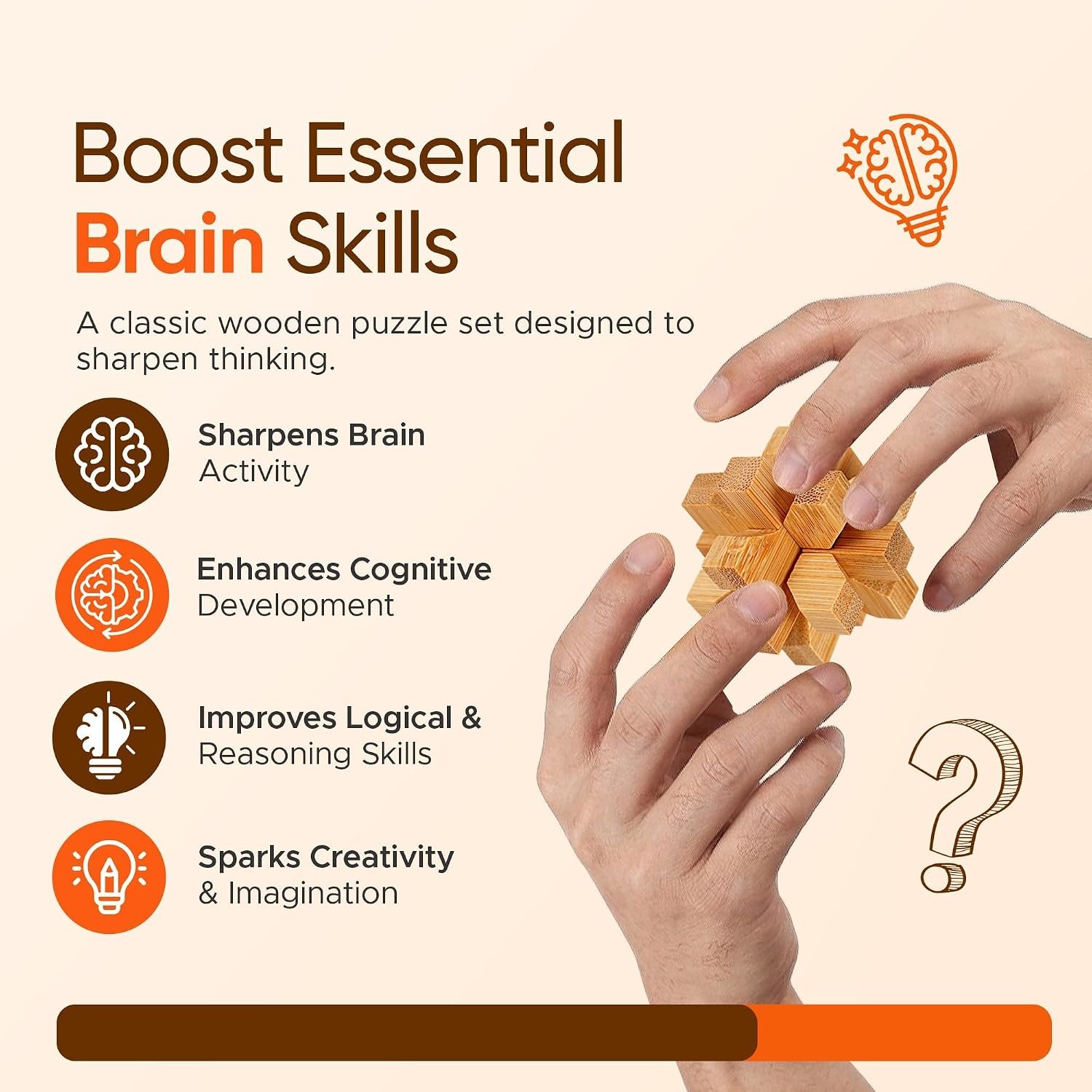
The listed educational objectives are hand-eye coordination, logical thinking and spatial awareness. Those terms describe the kind of activity involved. You look at shapes, make a choice and use your hands to test it.
They do not establish that the set will improve school results, memory or intelligence. There are no measured outcomes in the maker's description. It is better to choose spatial reasoning puzzles because the person enjoys that style of play.
The same care applies to difficulty. “All” is the stated skill level, but there is no numbered difficulty scale or confirmed progression. One person may see a movement quickly while another needs several attempts.
When comparing logical thinking puzzles, ask what makes the activity enjoyable for you. It might be discovering an unexpected join, rebuilding a shape or simply taking your time with a problem that has no screen attached.
Check size and material before buying
Wood is the stated material. The maker does not identify a species, coating or finish, so there is no basis for describing it as a particular timber or making claims about its surface treatment.
The listed item weight is 390 g. That gives you one useful point of comparison, but it does not tell you how much table space the set needs. Length, width and height are not provided.
This matters if you are buying for a small desk, a particular storage box or a travel bag. Avoid assuming that a puzzle will fit in a pocket just because it looks small in a photograph. Ask for measurements if fit is important.
The listed colour entry is Yellow1-9pcs. It is a catalogue-style name rather than a detailed finish description. If an exact shade matters for your purchase, seek clarification rather than reading more into that label.
Set up for single-player tabletop play
A clear table is a sensible starting point for single player puzzles. Give yourself enough room to lay parts down without mixing them with papers, cables or other small objects.
Work on one structure at a time. When a part comes free, place it where you can find it again. You might also take your own reference photo before making a major change, especially if you want to retrace the assembly later.
There is no stated completion time. You do not need to turn the session into a race. A short attempt can end with a useful observation even if the puzzle remains unfinished.
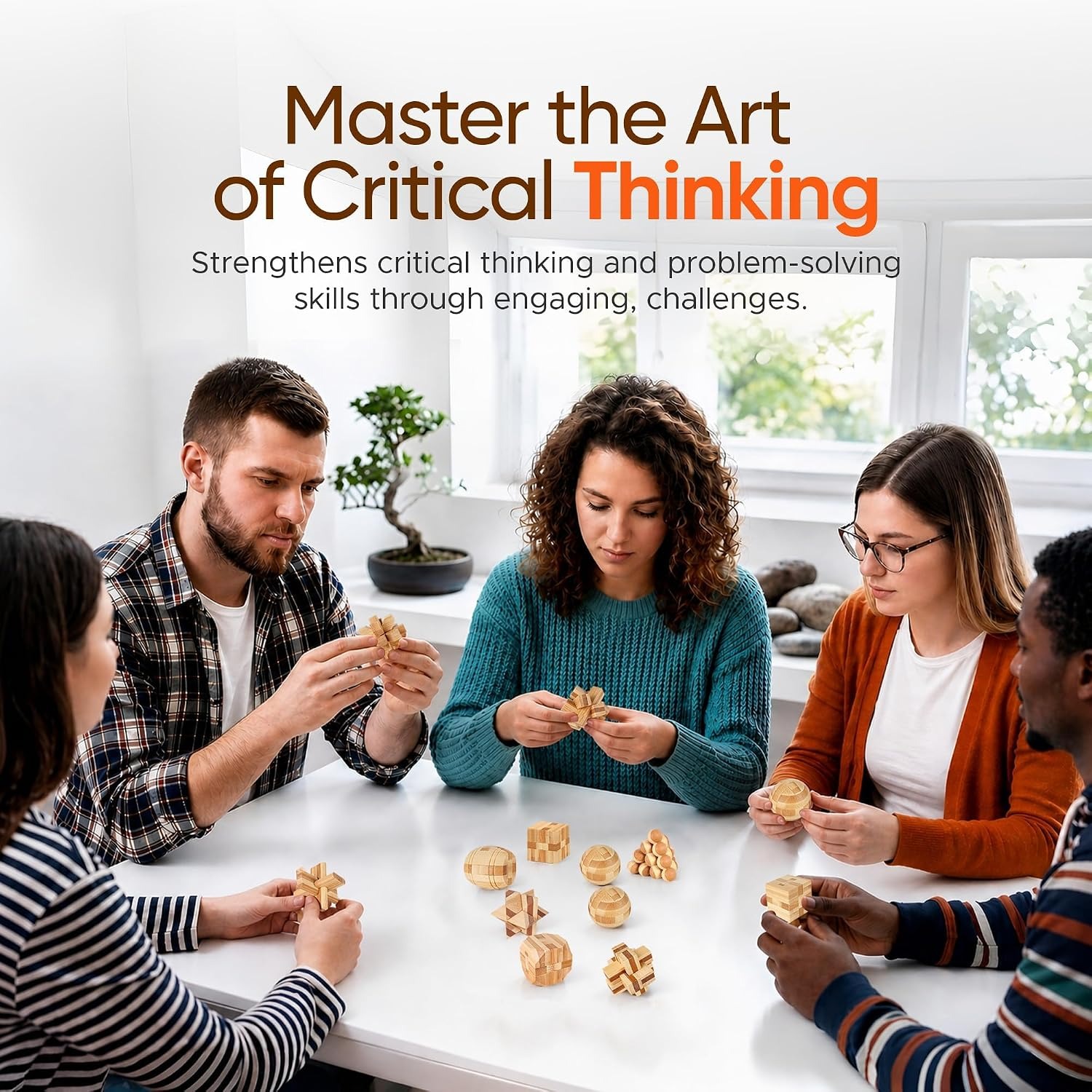
Although the listed player count is one, people can take turns trying a challenge. That is different from a supplied multiplayer game. No team rules, scoring system or competitive format are described.
A patient approach to getting stuck
Getting stuck is a normal possibility with hands-on puzzles. Repeating the same movement with more force is unlikely to give you useful new information. Instead, pause and inspect what is preventing the movement.
Turn the structure and look for a connection you have not considered. Check whether a part needs to move before another can shift. Keep each test small enough that you can see what changed.
If you feel frustrated, put the puzzle down with its parts kept together. Returning later may make it easier to examine the shape without repeating the same assumption. There is no need to finish in one sitting.
Because instructions and solutions are not confirmed, consider how comfortable you are with open-ended trial and error. Some buyers enjoy that uncertainty. Others would rather choose a product with a clearly stated guide.
Caring for wooden puzzle parts
For routine care, wipe the parts gently with a soft, dry cloth. Avoid soaking wood or using harsh cleaning products. The finish is not specified, so a simple approach is sensible.
Keep the set in a dry indoor place between uses. Put loose parts together rather than leaving them spread across a busy table. This also makes the next session easier to start.
Do not force a join that resists movement. Resistance may mean you have not found the intended sequence. Applying more pressure can put unnecessary strain on the parts.
Keep the original packaging, particularly while deciding whether the set meets your needs. It can help you keep the contents together, and original packaging is also part of the stated return conditions.
Gifting, delivery and returns
Wooden puzzle gifts make the most sense when the recipient enjoys the process, not just the finished object. Think about their patience for trial and error and whether they prefer solitary tabletop activities.
No gift wrapping, presentation box or included solution booklet is confirmed. If those details matter for a birthday or another occasion, ask before ordering. Do the same for the unclear breakdown of the nine-piece count.
This listing is intended for the New Zealand our, but no delivery timeframe is stated. Confirm the current delivery information before buying for a fixed date. Do not treat an unstated handling time as a promise of quick arrival.
The stated return period is 14 days from delivery. Returns require the item to be unused, complete and in its original packaging. This is not a trial-play offer, so check the available information before opening and using it if you are unsure.
The short version
This wooden puzzle set is a manual, nine-piece product for indoor tabletop use. It is listed for one player and a broad age range covering adults, teens and children, without an exact minimum age.
Choose it if assembly and disentanglement sound like activities you would enjoy. Before ordering, clarify any details you need about dimensions, separate puzzle counts or instructions. The right choice is one whose known features fit the way you want to play.